


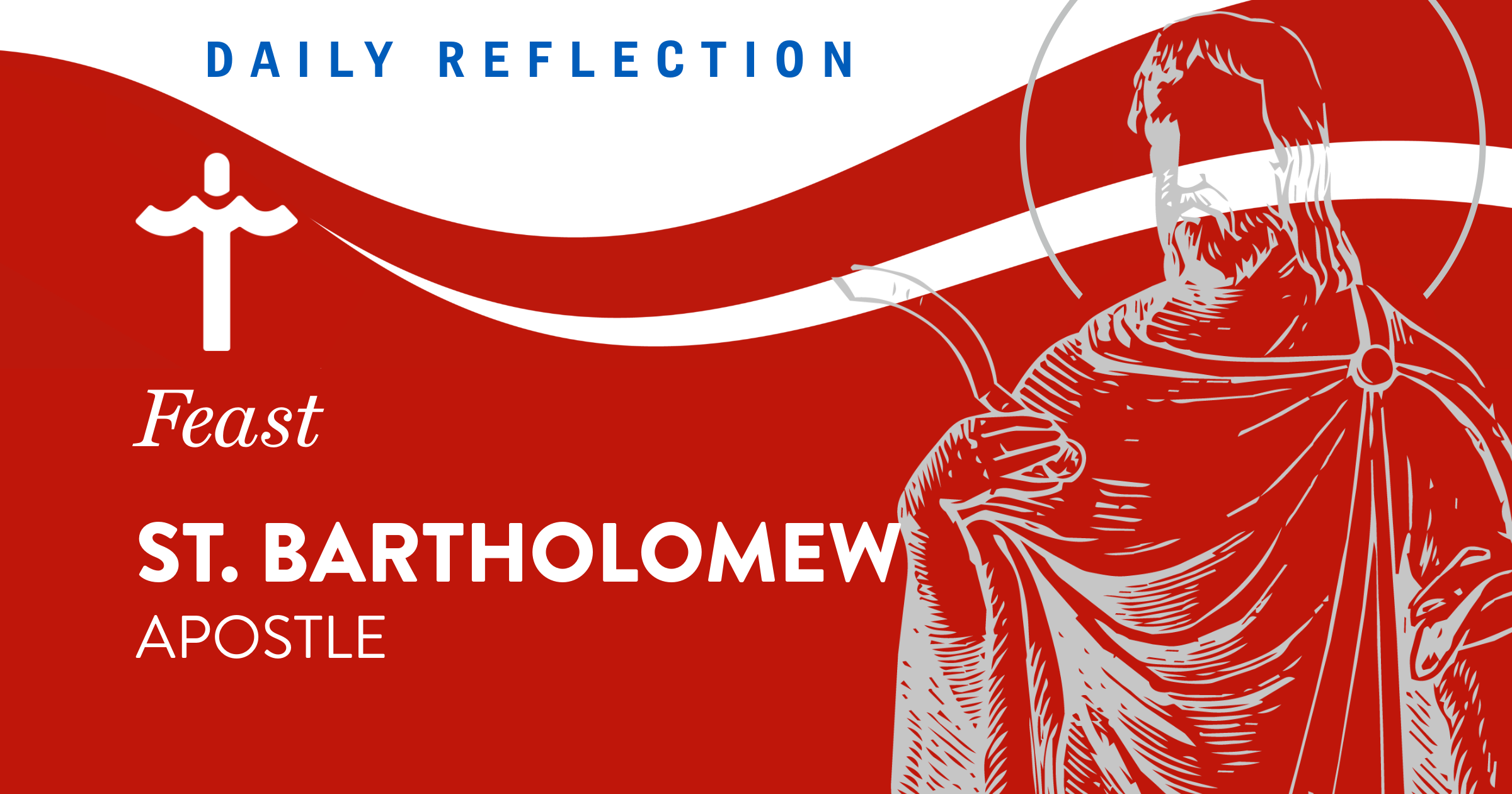
What would have happened if Philip, in John 1:45-51, had not “found Nathanael [aka Bartholomew] and told him, ‘We have found him about whom Moses… wrote, Jesus… from Nazareth”? Would Nathanael ever have met Jesus? Wound up an apostle? Would the people he preached to have heard the Good News?
God may have found a way.
And if we broaden the question, how many people are there that God wants to use to “proclaim the salvation of the Lord,” but who just don’t cooperate? People not alert or sufficiently in touch with God enough to recognize his inspirations, or who have just precluded them by not really being interested in “his glory”?
Jesus said to some who would not accept his preaching, “How can you believe when you accept glory from one another and do not seek the glory that comes from the one who alone is God?” (John 5:44). What if the only “glory” we are interested in is our own—calling it “achievement,” or “success,” or “popularity,” or even the self-affirmation that comes from living a good moral life, dotting all the i’s and crossing all the t’s in the rule book?
There is nothing wrong with keeping rules. Jesus himself said, “They who have my commandments and keep them are those who love me” (John 14:21).
When Jesus said this, however, the “commandments” he was talking about were not the ones we got through Moses, but the teaching of Jesus that takes us far beyond those—the “Sermon on the Mount,” for example, or his last instructions to the Apostles at the Last Supper (see Matthew, chapters 5-7 and John, chapters 13-17). How often do we read over these chapters to “evaluate our performance” as Christians? Are these the basis of our “examination of conscience” before Reconciliation? We won’t find any inflating sense of achievement in keeping these commandments, because they are all impossible except through humble and trusting surrender to the grace of God. Try, for example, “Love one another as I have loved you!”
We are certainly a credit to God the Creator when we live good human lives. But to “proclaim the salvation of the Lord… his glory to all nations,” we need to experience the glory of God’s divine life in us and others manifesting itself in action. For that we need a personal, intimate relationship with God: “Your friends tell the glory of your kingship, Lord.”
Revelation 21:9-14 calls the Apostles the “twelve foundations” of the “holy city.” Jesus said of them, “I have called you friends, because I have made known to you everything that I have heard from my Father.” And they lived up to that: “Your friends tell the glory of your kingship, Lord.” What if we all did?
Today’s Responsorial (Psalm 145): Your friends tell the glory of your kingship, Lord.
Prayer Prompt: Pray over the responsorial psalm. Get in touch with the “glory” you have seen. Share it.
— Fr. David M. Knight
View today’s Mass readings, Lectionary #629, on the USCCB website here
Fr. David M. Knight (1931-2021) was a priest of the Diocese of Memphis in Tennessee, a prolific writer, and a highly sought after confessor, spiritual director, and retreat master. He authored more than 40 books and hundreds of articles that focus primarily on lay spirituality and life-long spiritual growth.






0 Comments